

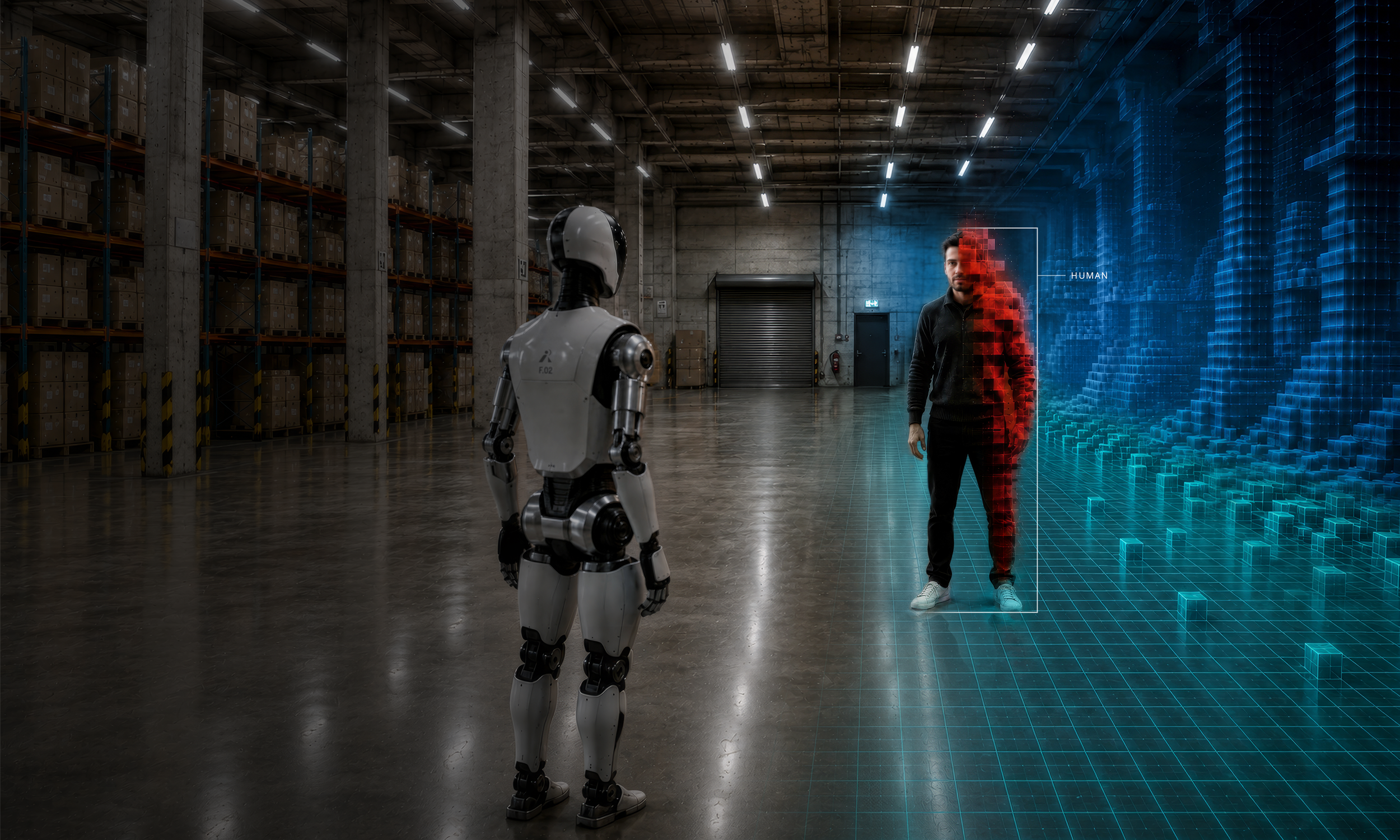
Safe Human Detection
A humanoid robot working side by side with people will encounter them everywhere: across a pallet or conveyor belt, in a narrow aisle between machines, between stacked totes, or half occluded behind a shelf.
To keep people safe without sacrificing productivity, the robot must detect humans, localize them in 3D space, and reliably distinguish them from objects, equipment, and clutter — even when they are partially hidden.
DS-Proxima is a safety-rated perception AI that gives your robot exactly this capability, with human detection performing in the SIL 2 band: less than one dangerous failure per 1,000,000 hours of operation.
Safe Free
Space Detection
Wherever a humanoid robot moves, it must know where it can safely step and reach: the floor ahead of it in a busy aisle, the gap between a pallet and a rack, the zone around a conveyor where a tote could drop, or the space behind it as it turns.
Traditionally, that certainty comes from safety-rated LiDAR — extra hardware, extra cost, and a sensor that sees only a plane.
DS-Proxima is a safety-rated perception AI that delivers Safe Free Space Detection from a single monocular camera: it reconstructs the traversable space around the robot in full 3D and declares an area free only when it is verifiably free.
The result is LiDAR-grade safety assurance without LiDAR, with performance in the SIL 2 band: less than one dangerous failure per 1,000,000 hours of operation.
Safe Out of
Domain Detection
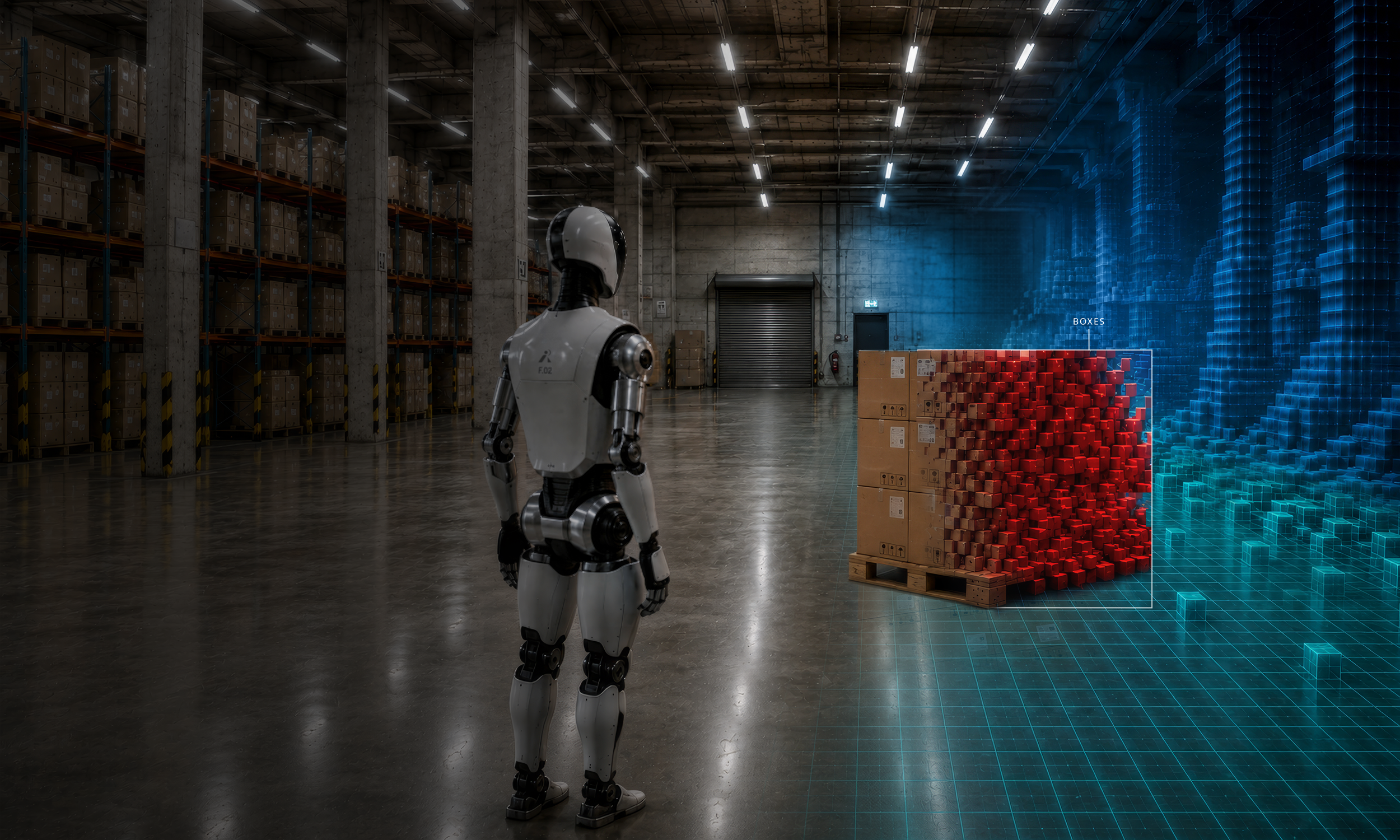
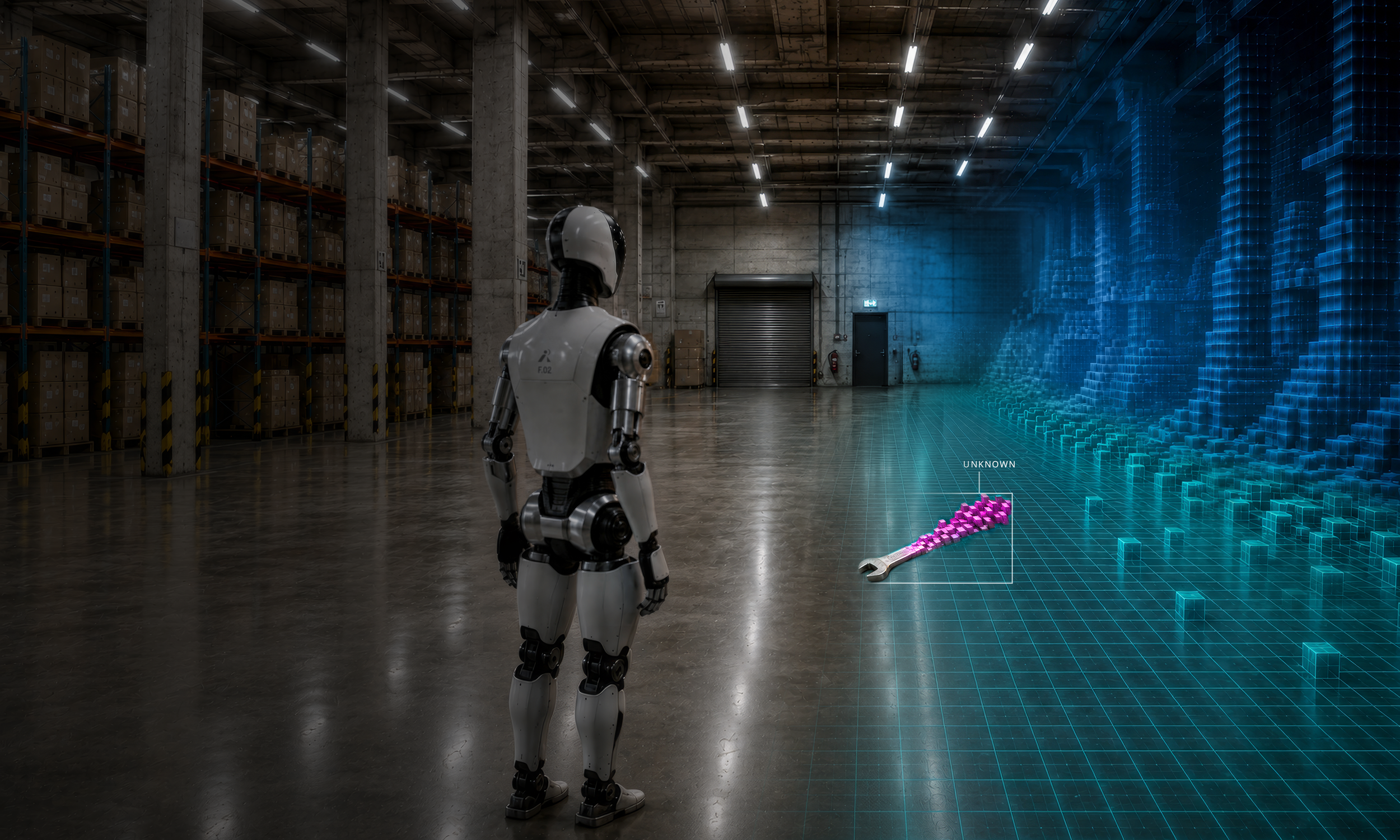
No training set covers everything a working facility can produce: a big wrench left on the floor, a spill, a fallen tote, packaging that has never been seen before — or lighting and surroundings that suddenly look nothing like the robot's operating domain.
The most dangerous mistake a perception AI can make is to be confidently wrong about something it has never learned. Is a safety-rated perception AI that gives the robot the ability to know what it doesn't know: it senses when an input deviates significantly from its training data, whether that is a single unknown object or the entire scene.
Anything unknown is marked as occupied in the robot's 3D occupancy grid — so instead of triggering a stop, the robot simply treats the unknown as an obstacle and evades it gracefully, keeping people safe and work flowing.
Like all DS-Proxima functions, Out of Domain Detection performs in the SIL 2 band: less than one dangerous failure per 1,000,000 hours of operation.

DS-Proxima AI Model
Outputs: 3D occupancy grid,
3D object list
Interfaces: ROS 2 / Apex.OS
Integration: Docker + ROS 2 /
Apex.OS
Platform: NVIDIA Thor / Orin
Safety: ISO/IEC TR 5469
ISO/PAS 8800
IEC 61508 / SIL 2
DS-2 Camera Module
Field of view: 99° horizontal ×
87° vertical
per camera module
1 to 8 modules
per system
Maximum
safe distance: 20 m
Interface: GMSL 2
Housing: IP68 / IP69K ingress
protection
-40 °C to +60 °C
operating
Shock 100 g –
IEC 60068-2-27
Vibration 5 g rms –
IEC 60068-2-64
EMC: EN 55032 / EN 55035
FCC 47 CFR Part 15
Class A
Field of view: 99° horizontal × 87° vertical
per camera module
1 to 8 modules per system
Maximum
safe distance: 20 m
Interface: GMSL 2
Housing: IP68 / IP69K ingress protection
-40 °C to +60 °C operating
Shock 100 g – IEC 60068-2-27
Vibration 5 g rms – IEC 60068-2-64
EMC: EN 55032 / EN 55035
FCC 47 CFR Part 15 Class A